How Can Quarries Reduce Costs Per Ton? ( 5 Key Suggestions )
Cost control is a core issue throughout quarry operations. As the core process of the production line, the selection of wear-resistant parts for crushers directly impacts the key operational metric of "cost per ton." Many quarry managers fall into a misconception: they focus excessively on the unit price of crusher wear-resistant parts while neglecting the more important cost per ton—the cost of crusher wear-resistant parts allocated to processing each ton of ore.
This article will focus on finding the optimal balance between the lifespan and purchase price of wear-resistant parts for crushers, helping quarries truly reduce costs and increase efficiency. Below are five key suggestions for quarry managers:
- Why is it a misconception to only look at the unit price of purchase?
- Calculate the cost per ton: A formula to understand the core logic.
- Material selection: Find the most cost-effective solution suitable for the working conditions.
- Practical skills for procurement decision making.
- Repairing and reusing old materials: a practical method to further reduce costs.
I.Why is it a misconception to only look at the unit price of the purchase?
1.1 Purchase unit price and cost per ton: two completely different concepts
Actual mine operation and maintenance data show that unreasonable procurement of wear-resistant parts for crushers can lead to overall costs (purchase + replacement + downtime losses) that are more than 40% higher than those of scientific procurement. Focusing only on the unit price of the purchase is like only seeing the part of an iceberg above the water, ignoring the huge hidden costs beneath the surface.
1.2 Total Lifetime Cost (TCO) Framework
To scientifically assess the economic viability of wear-resistant parts, the concept of Total Life Cost (TCO) must be introduced. For crusher wear-resistant parts, the total life cost mainly includes:
- Initial material purchase price
- Manufacturing and installation costs
- Routine maintenance and repair costs
- Production losses due to downtime
- Wear part replacement frequency
- Safety and operational risk costs
-
In wear-prone operating environments, material wear rate is a core driver of costs. Even a slight improvement in the lifespan of wear-resistant parts can significantly extend replacement cycles and reduce overall costs.
II. Calculating the Cost Per Ton: A Formula to Understand the Core Logic
2.1 Ton Cost Calculation Formula
Cost per ton = (Purchase price of wear-resistant parts + Replacement labor cost + Downtime loss) ÷ Wear-resistant part lifespan (tons processed)
This formula clearly shows that the impact of wear-resistant component lifespan on cost per ton is far greater than that on the purchase price.
2.2 Practical Calculation: Why are high-priced, high-quality components more cost-effective?
Case Background: Jaw Plate Selection Comparison for Crushing Granite in a Quarry
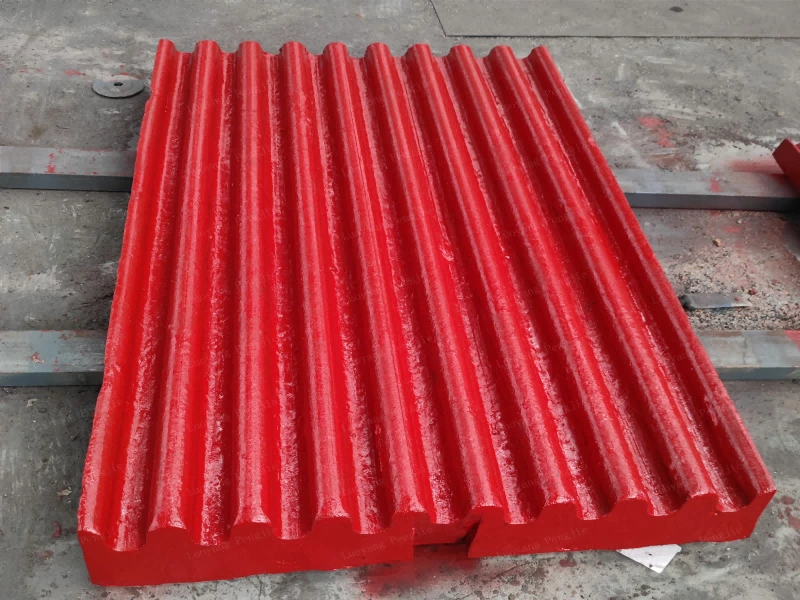
Comparison items Low-priced accessories High-priced, high-quality accessories Purchase unit price 10,000 yuan/set 18,000 yuan/set Service life 300 hours 600 hours Replacement of workers + downtime losses 5,000 yuan/time 5,000 yuan/time Hourly cost 50 yuan/hour ≈38.3 yuan/hour Conclusion: Although the purchase price of high-priced, high-quality jaw plates for crushers is 80% higher, the hourly cost is actually reduced by about 23%. If a quarry operates for 5,000 hours a year, the cost of jaw plates alone can be reduced by nearly 60,000 yuan.
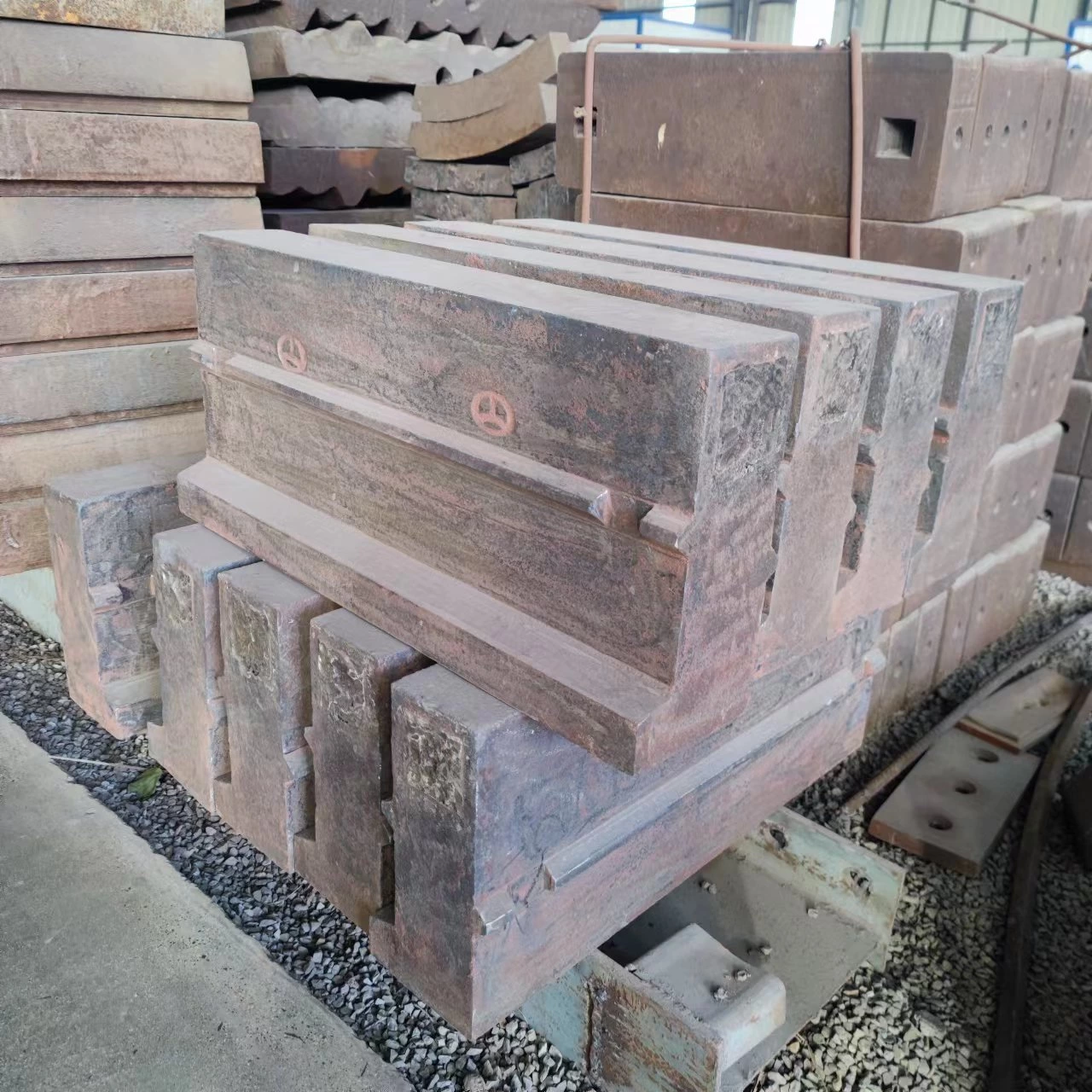
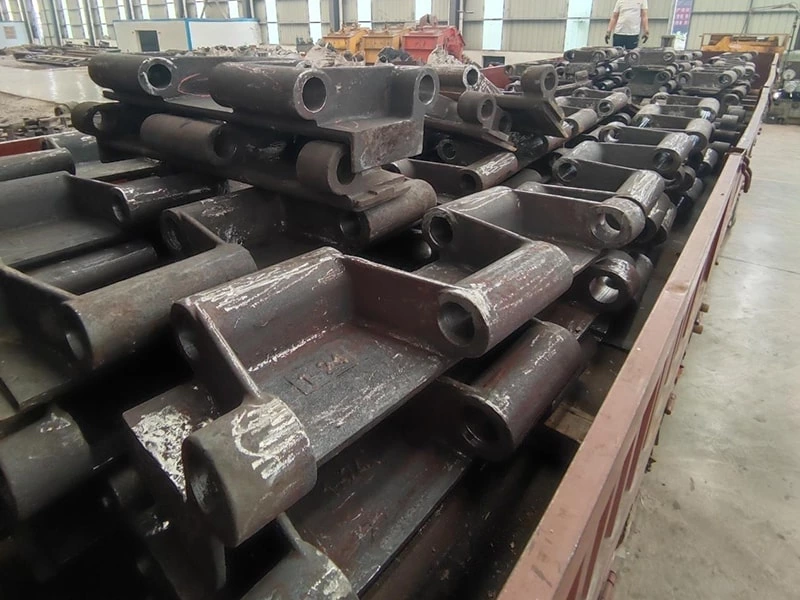
The blow bar with added alloys has twice the lifespan of the ZGCr26Re material
- 2.3 Downtime Costs: The Most Easily Underestimated
-
Hidden Expenditures
In wear-prone operations, the losses from crusher downtime are often severely underestimated. Whether planned or unexpected, downtime leads to production interruptions, delivery delays, and increased operational pressure. In the mining industry, even a few hours of downtime can result in production losses exceeding the initial price difference between high-quality and low-quality wear-resistant parts.
III. Material Selection: Finding the most cost-effective solution for the appropriate working conditions
Different operating conditions require different wear-resistant parts materials. There is no "one-size-fits-all" material, only the "most suitable material." Choosing the right material is key to finding a balance between cost and lifespan.
3.1 Performance ladder of wear-resistant materials
Material type Relative abrasion resistance relative cost Applicable working conditions Ordinary manganese steel (Mn13Cr2) 1x (benchmark) 1x Moderate impact, low abrasion ( jaw plate ) High manganese steel (Mn18Cr2) 1.3-1.5 times 1.2-1.3 times High impact, high abrasion ( hammer head ) High manganese steel (Mn22Cr2) 1.6-1.8 times 1.4-1.5 times Extremely high impact and high abrasion ( mantle, concave ) High-chromium cast iron 2-3 times 1.8-2 times Low impact, high abrasion ( blow bar ) Ceramic composite material 3-4 times 2.2-2.5 times Extreme abrasive conditions 3.2 Practical Selection Recommendations
- For medium impact and high wear conditions (such as crushed granite and basalt): Mn18Cr2 or Mn22Cr2 high manganese steel is recommended. Selection logic: Increase hardness while ensuring sufficient toughness to extend the service life of wear-resistant parts.
- For extreme impact conditions (such as primary crushing of large hard rock blocks): Mn18Cr2 is recommended. Selection logic: Prioritize toughness to avoid greater losses due to the breakage of wear-resistant parts.
- For low-impact, high-abrasion applications (such as sand making machine hammers): high-chromium cast iron or ceramic composite materials are recommended. Selection logic: wear resistance is the core objective, maximizing service life.
-
3.3 Case Study: Practice in Romanian Quarries
A quarry in Romania using a Magotteaux 2100 VSI crusher faced a challenge in selecting the appropriate blow bar. They tested and compared three options:
- OEM original parts: 50-hour lifespan, cost calculated at 100%.
- Standard high-chromium components: lifespan 25 hours, cost 40%
- Ceramic composite components: 46-hour lifespan, 70% of the cost.
-
Economic analysis:
- Standard high-chromium parts: 0.4 ÷ 25 = 0.016 (OEM equivalent unit/hour), improving cost-effectiveness by 56%.
- Ceramic composite parts: 0.7 ÷ 46 ≈ 0.0152 (OEM equivalent unit/hour), improving cost-effectiveness by 60%.
-
Test results show that both alternatives are significantly better than original parts, proving that scientific selection is more effective in reducing costs than blindly trusting original parts.
IV. Practical Skills for Procurement Decision-Making
4.1 Establish a working parameter table to avoid "over-purchasing"
purchasing wear-resistant parts for crushers , it is essential to clearly define three core operating parameters to avoid blindly selecting high-end materials and wasting costs:
- Material hardness (Mohs hardness value)
- Impact strength (fall height/velocity, feed size)
- Operating temperature
-
For example, a port replaced ceramic wear-resistant sheets with polyurethane sheets for coal transportation, reducing annual procurement costs by 35% without affecting wear life.
4.2 Request test reports to avoid the "false labeling trap".
When purchasing, you must request key performance indicator test reports from suppliers to avoid buying products with falsely labeled materials.
- High manganese steel: initial Rockwell hardness ≥20, which can reach 50 or more after work hardening.
- High-chromium cast iron: Check whether the chromium content and carbide morphology meet the standards.
- Ceramic composite components: Confirm that the ceramic content and bonding strength meet the requirements.
-
Case: A building materials factory once purchased a product labeled "high chromium composite board". After testing, it was found that the chromium content was only 8% (the standard is 12%), and the wear resistance life was 60% shorter than promised. The subsequent rights protection took 3 months and added extra operating costs.
4.3 Conduct small-batch trials and verify compliance before bulk purchasing.
When purchasing, prioritize manufacturers that support "small-batch trials." Verify the lifespan and compatibility of wear-resistant parts through small-batch testing before proceeding with bulk purchases. This effectively mitigates the risks associated with large-scale procurement. For example, a chemical company first tested 50 wear-resistant parts, confirmed their compliance, and then made a bulk purchase, avoiding losses from purchasing thousands of parts.
V. Repairing and Reusing Old Materials: A Practical Method for Further Cost Reduction
5.1 Weld overlay repair reduces the cost of purchasing new parts.
For wear-resistant crusher parts that have not reached their wear limit, welding repair technology can be used: the repair cost is only 30%-50% of that of new parts, and the service life after repair can reach 70%-80% of that of new parts, which can significantly reduce spare parts procurement expenditure.
5.2 Case Study of Yuxi Mining
Yuxi Mining's ore dressing plant performs meticulous maintenance on reusable components of its cone crusher, such as the fixed cone, moving cone, and release cylinder, saving over 490,000 yuan in spare parts costs annually. Simultaneously, by modifying the transfer funnel and installing trapezoidal buffer bars, the accumulated ore particles between the buffer bars naturally form a wear-resistant protective layer. This reduces the need for monthly replacement of the manganese steel liners to quarterly maintenance of the buffer bars, resulting in an additional annual cost saving of 115,000 yuan.
Conclusion: The key to cost reduction lies in finding a balance.
The key to reducing the cost per ton in quarries is not simply pursuing low-price procurement, nor blindly choosing the most expensive materials, but finding the golden balance between the lifespan and price of crusher wear parts based on working condition adaptation, performance verification, and scientific calculation.
Remember these three key data points to help reduce costs and increase efficiency:
- The purchase price of high-quality wear-resistant parts for crushers may be 80% higher, but the cost per ton can be reduced by 20%-30%.
- Scientific selection can reduce the overall cost of wear-resistant parts by more than 40%;
- Repairing and reusing old parts can further reduce the cost of crusher spare parts by 30%-50%.
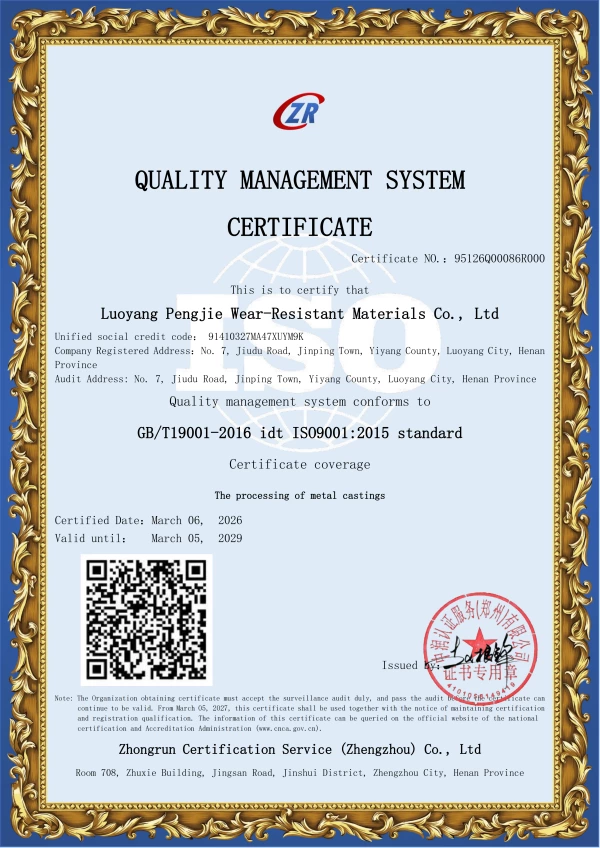
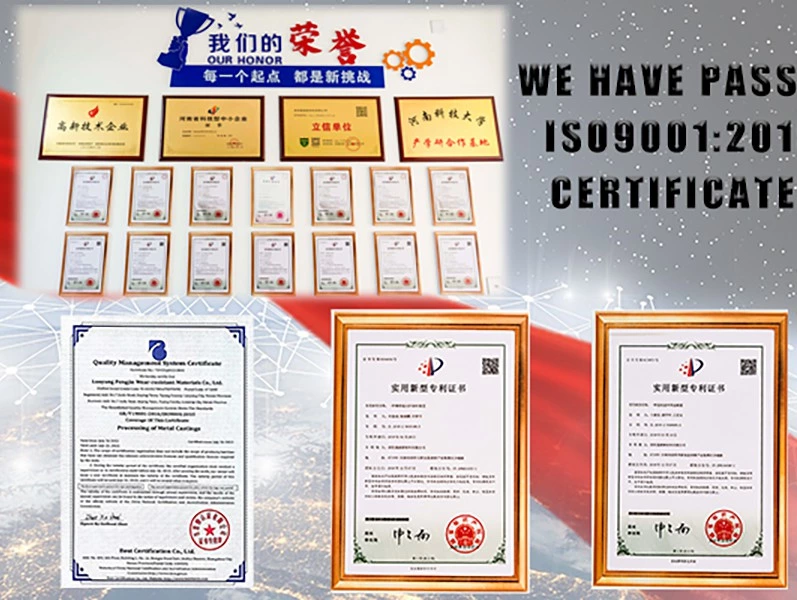
As a professional manufacturer of wear-resistant parts for crushers, Luoyang Pengjie has ISO9001 quality certification and 9 utility model patents. Its engineering team can provide customized material solutions and cost per ton calculations based on the specific working conditions of the quarry, helping the quarry to achieve real cost reduction and efficiency improvement.
References
1. Zhejiang Langguang Precision Electromechanical Co., Ltd. Key Points for Avoiding Pitfalls in Wear-Resistant Pad Procurement: Balancing Cost and Durability [EB/OL]. (2025-12-16). http://zjlgjm.com/news/industry-news-242.html.
2. ZGT. NM550 Lifecycle Cost Analysis [EB/OL]. (2026-02-05). https://zgtsteel.com/zh-CN/nm550-lifecycle-cost-analysis/.
3. Qiming Casting. Cost-Effective Wear Parts for Your Magotteaux 2100 Sand Maker: A Case Study from a Romanian Quarry[EB/OL]. (2025-09-25). https://www.qimingcasting.com/shoes-for-your-magotteaux-2100-sand-maker-a-case-study-from-a-romanian-quarry/.
4. Yunnan Mining. Squeezing More Profits from Ore – Yuxi Mining's Beneficiation Plant Achieves Breakthroughs in Cost Control and Efficiency Improvement [EB/OL]. (2025-09-22). http://www.ynmining.com/content/?14971.html.
5. Sandvik Mining. Lifecycle management cuts screen costs[EB/OL]. Mining Weekly. (2025-08-08). https://www.miningweekly.com/print-version/lifecycle-management-cuts-screen-costs-2025-08-08.
6. Mogoalloy. 1.0722: High-manganese special steel that solves the problem of rapid wear of mining wear parts [EB/OL]. (2025-11-02). http://www.mogoalloy.com/?3023.html.
7. MM "Modern Manufacturing". Expensive tools? Save money with tools! The Gwei ultra-fine grain end mill, this "expensive" tool, actually reduces the cost per piece by 50% [EB/OL]. (2025-08-14). https://mw.jgvogel.cn/c/1540/1540061.shtml.