HOW PROFESSIONAL HEAT TREATMENT EXTENDS THE SERVICE LIFE OF CRUSHER WEAR PARTS
In the competitive mining and quarrying industry, the ultimate goal is lowering the cost-per-ton. While many factors affect production, the durability of your crusher wear parts—specifically Jaw Plates, Blow Bars, and Cone Liners—is the most significant variable.
Many buyers ask: “Why do two parts with the same chemical composition perform so differently in the field?” The answer lies in precision heat treatment.
1. Why Heat Treatment is the Secret to Impact Crusher Blow Bar Lifespan
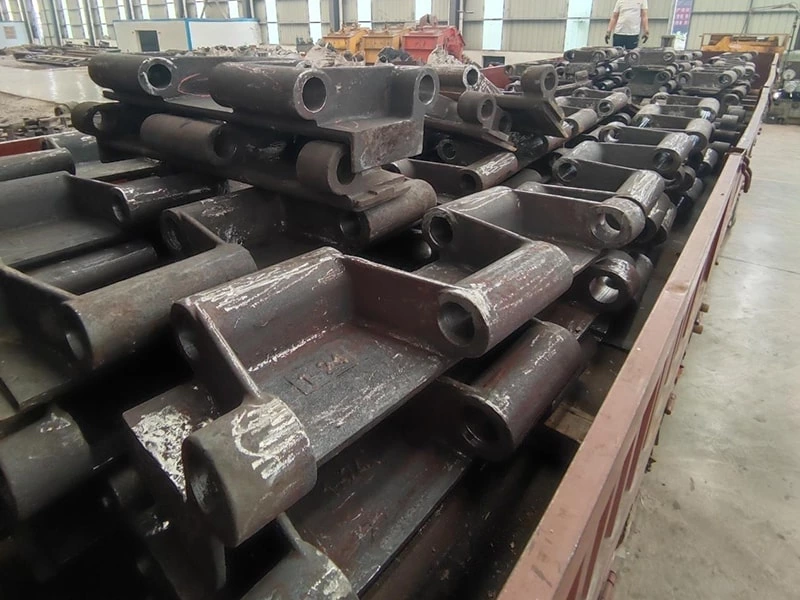
For high chrome blow bars used in impact crushers, hardness is only half the battle. Without a scientific quenching and tempering cycle, the part will be too brittle to handle tramp metal or oversized feed.
-
Long-tail Focus: Optimizing martensitic transformation in high chromium cast iron.
-
The Result: By precisely controlling the cooling rate, we ensure a dense martensitic matrix with finely dispersed secondary carbides, which significantly reduces abrasive wear and prevents catastrophic snapping.
-
2. Maximizing Manganese Steel Work Hardening for Jaw Plates
High manganese steel (Mn13, Mn18, Mn22) is famous fo r its ability to harden under pressure. However, this "work-hardening" property only functions if the initial water toughening process is flawless.
-
Long-tail Focus: Water toughening process for austenitic manganese steel castings.
-
The Technical Edge: If the heating temperature is too low or the water cooling is too slow, carbides will precipitate at the grain boundaries, making the Jaw Plates or Mantles crack prematurely. Our 30 years of experience ensures a 100% austenitic structure every time.
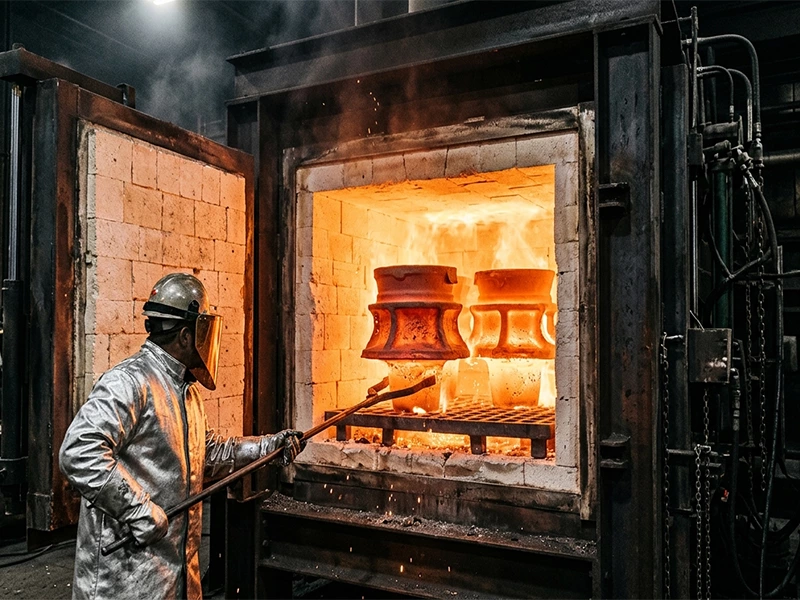
3. 30 Years of Expertise in Heavy-Duty Wear Solutions
With over 30 years of manufacturing experience in the crusher spare parts industry, we have developed proprietary heat treatment curves tailored for different rock types, from abrasive granite to hard basalt.
Our "Zero-Defect" Quality Control Testing Protocol
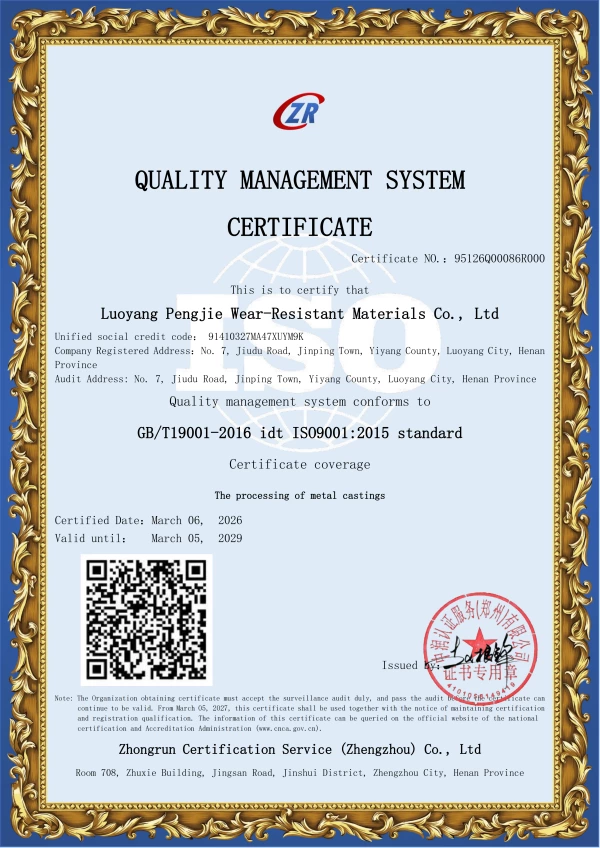
To guarantee the durability of crusher liners, every production batch undergoes a rigorous four-tier inspection:
-
Chemical Spectrographic Analysis: Ensuring the alloy ratios are perfect for your specific application.
-
Microstructure (Metallographic) Examination: Verifying grain refinement to prevent internal stress buildup.
-
Ultrasonic Flaw Detection (UT Testing): Detecting internal sand holes or shrinkage that visual inspection misses.
-
Comprehensive Hardness Mapping (HRC/HB): Ensuring consistent wear resistance from the surface to the core.4.
-
4.Comparing Heat Treatment Standards for Different Wear Parts
-
Long-tail Keyword Application Target Material Heat Treatment Goal High-impact jaw crusher plate life Mn18Cr2 / Mn22 Maximum ductility + Surface work hardening. Abrasive resistance of blow bars High Chrome (Cr20-27) High Martensite content for extreme hardness ($60-65$ HRC). Cone crusher mantle structural integrity Modified Manganese Stress relief to prevent deformation under constant load. 5. Global Technical References & Standards
We build our reputation on verified science. You can cross-reference our processes with the following international authorities:
-
ASM International - Heat Treating of Irons and Steels https://www.google.com/search?q=https://www.asminternational.org/handbooks/content/Vol04/V04_Front_Matter
-
ASTM A128 / A128M - Standard Specification for Steel Castings, Austenitic Manganese (Hadfield Steel)https://www.astm.org/a0128_a0128m-19.html
-
ScienceDirect - Influence of Heat Treatment on Microstructure and Wear Resistancehttps://www.sciencedirect.com/science/article/abs/pii/S092401360500854X
-
Can you afford the hidden costs of unexpected downtime caused by a single poorly heat-treated blow bar?